







Hackathon Preparation “Prequel”: What You Need to Do Before Organizing the Event
Insufficient preparation leads to a series of predictable problems: ambiguous rules spark controversy; unclear target audiences result in marketing failures; underestimating resource needs forces you to scramble for sponsors before launch or exhaust your team’s energy due to excessive workload… Instead of frantically patching things up mid-event, it’s better to prevent problems before they arise.
Conversely, thorough preparation lays a solid foundation for the smooth running of subsequent stages. You can think of this phase as drawing blueprints before construction. The more detailed the blueprint, the more stable the final building. When unexpected challenges arise, you’ll be glad you didn’t skip these foundational tasks, leaving you with enough bandwidth to handle emergencies.

1. Define Theme, Goals, and Success Metrics
First, clarify the theme and goals of your hackathon. Choose a theme or focus area—this could be a specific technology (like AI or blockchain), a problem domain (like privacy or payments), or an open-ended challenge. Your theme will attract relevant participants and help sponsors see the connection between the hackathon and their products.
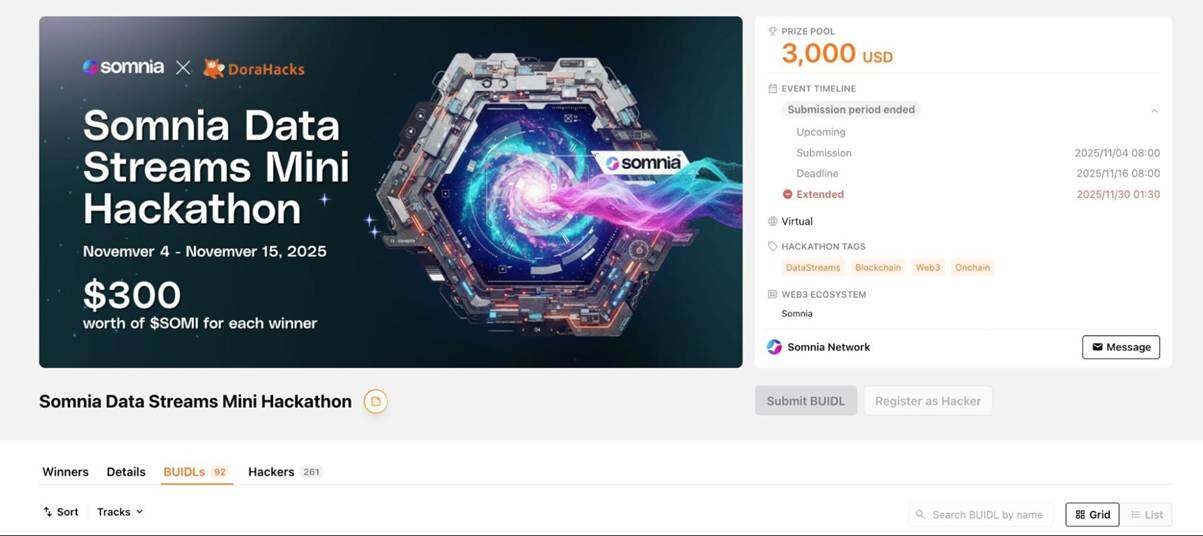
A hackathon organized by Somnia (a public chain) around its new SDK “Somnia Data Stream”
Next, define your goals. Do you want to build a developer community, generate innovative solutions for a specific problem, connect sponsors with talent, or provide educational opportunities for beginners? Different goals will dictate different design choices throughout the process.
Finally, be specific about what success looks like. Set measurable metrics, such as number of registrations, number of valid submissions, hacker satisfaction, sponsor satisfaction, or media coverage. Establishing these benchmarks early helps you make trade-offs when resources are tight and provides clear evaluation criteria for post-event review.
Even so, goals must be realistic. Consider the size of the developer community you can reach, the user base of the required technology, and whether your prize pool is competitive compared to similar events. Goals that are both ambitious and achievable motivate the team without leading to eventual disappointment.
2. Map Out Required Resources
Once your goals are clear, plan the resources needed to achieve them:
● Budget for prizes, marketing, and tools.
● Your network of contacts with potential sponsors, communities, or media outlets.
● Tools and platforms for submissions, communication, and judging.
● External contributors you need, and the weekly time they can commit.
Be specific. If you want a $10,000 prize pool, you need either existing funds or a sponsor willing to provide that amount. If you want 500 participants, you need the marketing reach to attract them. Identifying resource needs early allows you to spot and fill gaps before moving forward.
3. Know Your Audience: Who They Are and Where They Are
Think carefully about who you want to participate. Are you targeting university students, early-career developers, seasoned professionals, or a mix? Are you focused on a specific region, country, or is it global? What skill levels and backgrounds do you want to include?
Understanding your audience determines almost everything: the language and tone of marketing, the platforms for promotion, the complexity of challenges, the size of prizes, and even the timing of the hackathon. A hackathon for university students in Southeast Asia will look completely different from one for senior developers in North America.

An AI hackathon organized by King’s College London
Once you’ve identified your target audience, find out where they are active online. This could be X (formerly Twitter), Discord communities, Reddit, LinkedIn, university mailing lists, or developer forums. Knowing where your audience congregates dictates your marketing strategy.
4. Research Existing Hackathons
You don’t have to start from scratch. Study how successful hackathons operate and borrow their methods. Participate in a few hackathons yourself to experience them from a hacker’s perspective. Read their rules, observe their communication style, and note what works and what frustrates you as a participant.
Browse platforms like DoraHacks to see how top hackathons structure challenges, awards, and schedules. Pay attention to how they set rules, define submission requirements, and conduct judging. Reach out to organizers of hackathons you admire and ask for advice—most are happy to share their experiences and lessons learned.
Learning from others helps you avoid common mistakes and adopt proven practices.

5. Clarify Team Roles and Responsibilities
Whether you’re building a team from scratch or working within an existing organization, clearly define everyone’s responsibilities. Typical roles include business partnerships, marketing & community outreach, participant support, platform & technical operations, and judging coordination.
Assign clear owners for each area and establish decision-making processes. Unclear responsibilities lead to missed tasks and frustration. Even a small team benefits from defined roles, and larger organizations need this to avoid duplication or gaps in coverage.
Be sure to conduct regular progress check-ins to track advancement and identify blockers early.

6. Choose a Platform and Get to Know It Deeply
Choosing the right hackathon platform is crucial. DoraHacks is your best platform for launching at zero cost, offering sufficient flexibility and a powerful Organizer Dashboard. Sometimes organizers also use private forms or spreadsheets for registration. When evaluating platforms, consider submission and judging features, customization options, cost & pricing models, ease of use for organizers and participants, and available community or support services.
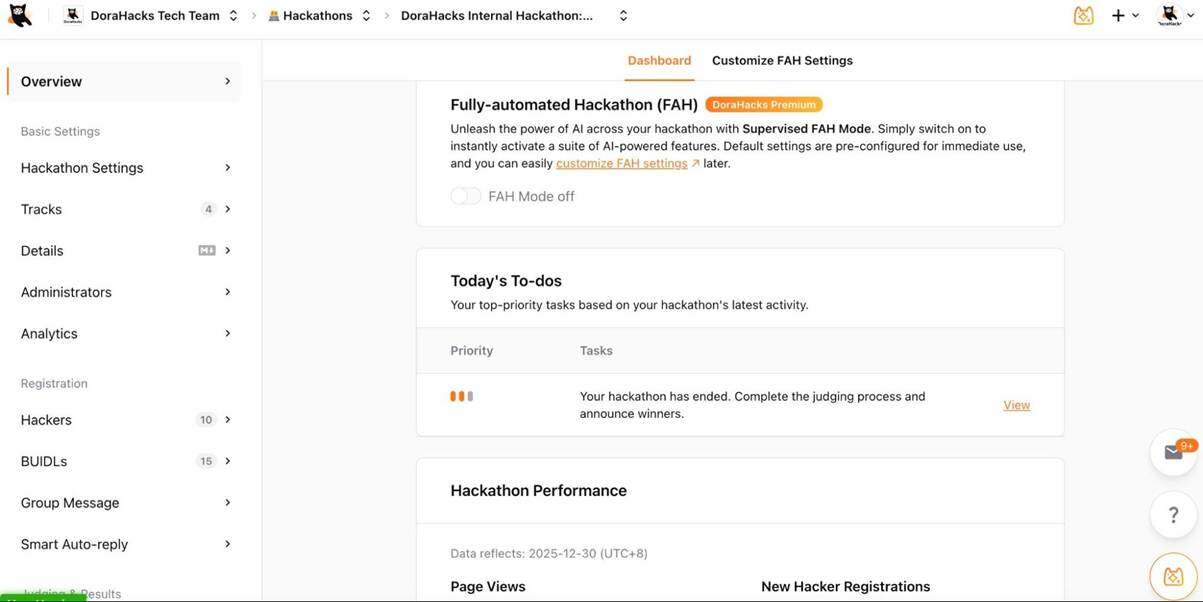
DoraHacks’ Organizer Dashboard, for hackathon management and hacker support
Once you’ve selected a platform, familiarize yourself with it thoroughly from both the hacker and organizer perspectives. Organize a test hackathon to go through the organizer flow: create an event page, set rules, configure judging criteria, and manage submissions. Then experience it as a participant: register, submit a mock project, and feel the process. Understanding both perspectives helps you write clearer instructions, anticipate participant confusion, and resolve issues quickly during the hackathon.
7. Create a Realistic Timeline
Work backward from your intended hackathon date. Most online hackathons require one to two months of preparation, with larger ones needing more time. Plan key milestones: when to start contacting sponsors, when to launch marketing, when registration opens and closes, when the hackathon period runs, when judging occurs, and when winners are announced.
Build in buffer time. Sponsor negotiations often take longer than expected, approvals can be delayed, and unexpected issues will arise. Also consider external factors like school exam periods, major holidays, or competing events that might affect participation.
If the timeline feels overly tight, consider postponing the date. A perfectly executed hackathon a month later is better than a rushed event on the original date.
8. Decide If You’re Ready to Go
After carefully considering all the above, take a hard look at whether now is the right time to proceed. Do you have the required resources, or a concrete plan to acquire them? Is your team aligned and fully committed? Is the timeline feasible for all involved?
If there are still gaps, it’s better to address them before launching rather than struggling through an under-resourced hackathon. You might consider gaining experience by joining another hackathon’s organizing team first, or scaling down your goals to a more suitable project for your first attempt.
When everything is in place, you’re ready to move from “Step Zero” into the formal organizing phase.
Explore DoraHacks for more features to support your hackathon, or talk to an expert now!
About DoraHacks
DoraHacks is a global leading hackathon community and open-source developer incentive platform. DoraHacks provides a toolkit for all parties to empower them to organize hackathons and fund early-stage ecosystem startups.
DoraHacks is committed to driving a global hacker movement in Web3, AI, quantum computing, and space tech. To date, over 30,000 startup teams have received a cumulative total of over $300 million in funding through the DoraHacks community. A large number of open-source communities, enterprises, and tech ecosystems are actively leveraging DoraHacks and its BUIDL AI capabilities to organize hackathons and fund open-source initiatives.
Official Website| Twitter|Discord|Telegram|Binance Live|Youtube
This article is sourced from the internet: Hackathon Preparation “Prequel”: What You Need to Do Before Organizing the Event
The market surge and sudden changes in the second half of 2025 However, the market took a dramatic turn in October. Over the weekend of October 10-11, the crypto market experienced an unprecedented leveraged stampede-like flash crash: Bitcoin plummeted nearly 18% in five days after reaching its peak, while Ethereum and many smaller cryptocurrencies generally suffered double-digit drops, triggering a chain reaction of forced liquidations due to panic selling. Within just two days, approximately $19.3 billion in contract positions were liquidated, resulting in massive margin calls for many contract traders and a sharp depletion of market liquidity. Key indicators such as trading volume, open interest, lending rates, and funding rates experienced violent and abnormal fluctuations during this “Black Weekend,” creating a scene of utter carnage on trading screens. This October…
Related articles





























 English
  繁體中文
繁體中文  简体中文
简体中文  日本語
日本語  Tiếng Việt
  العربية
  한국어
한국어  Bahasa Indonesia
  हिन्दी
  اردو
اردو  Русский